A tool that sorts abstracts quickly can still leave you with a weak systematic review if it misses eligible studies. The best systematic review AI tools help with distinct jobs: literature searching, prioritizing screening, extracting information, and managing decisions. None can take responsibility for your inclusion criteria or the accuracy of your final synthesis.
Start with the task slowing your team down. Academic research teams should choose software that lets them check what the AI suggested, what reviewers decided, and which source supports each finding.
Key Takeaways
Rayyan and Covidence are strong starting points for teams that need organized screening and reviewer decisions.
ASReview LAB focuses on active-learning screening; Elicit is more useful for discovery and structured extraction.
Test automation against known eligible studies before relying on its rankings. A smaller screening queue is useful only if recall remains acceptable.
Keep the search record, reviewer decisions, extracted data, and source passages traceable. AI suggestions are inputs to those records, not substitutes for them.
Match the tool to the review stage
Systematic reviews have several separate workloads, though a scoping review may prioritize different needs. Literature searching retrieves records, deduplication removes repeat entries, screening applies eligibility criteria, and extraction captures information from included studies. Risk-of-bias assessment and synthesis require further judgment.
A product may handle one stage well without covering the others. ASReview LAB uses artificial intelligence methods to prioritize imported records for screening, but it doesn't replace a planned search of bibliographic databases. Large language models can summarize PDFs, but they don't make a chat tool a collaborative screening platform or replace researchers' decisions.
A 2025 review of digital tools for systematic reviews describes how automated tools support different parts of the process. Use that distinction when comparing subscriptions: check what enters the tool, what decisions it records, and what you can export when the review ends.
Compare the leading tools at a glance
The clearest choice depends on your review type, including a scoping review, and where your team needs support from an evidence synthesis platform. Compare available deduplication tools, workflow fit, and plan limits before committing.
Tool | Best fit | Main strength | Check before committing |
|---|---|---|---|
Rayyan | Small teams screening records | Collaborative screening platform with duplicate detection and title and abstract screening | Plan limits and AI features by tier |
Covidence | Teams managing a structured review | Independent screening, conflict resolution, extraction, and reporting | Annual cost and institutional access |
ASReview LAB | Teams testing active-learning screening | Free, open-source record prioritization | Stopping rules and missed-study checks |
Elicit | Discovery and structured evidence work | Paper search, screening, and extraction support | Search coverage and plan limits |
DistillerSR | Larger or regulated review programs | Configurable review workflows and AI-assisted screening | Quote-based pricing and validation needs |
EPPI-Reviewer | Complex, collaborative evidence synthesis | Review management with automation options | Account and shareable-review fees |
No row means that a tool can conduct an unattended systematic review. In particular, discovery features shouldn't replace a reproducible database strategy, and extraction features shouldn't turn unchecked output into study data.
Screening tools: Rayyan, Covidence, and ASReview
Rayyan and Covidence for reviewer decisions
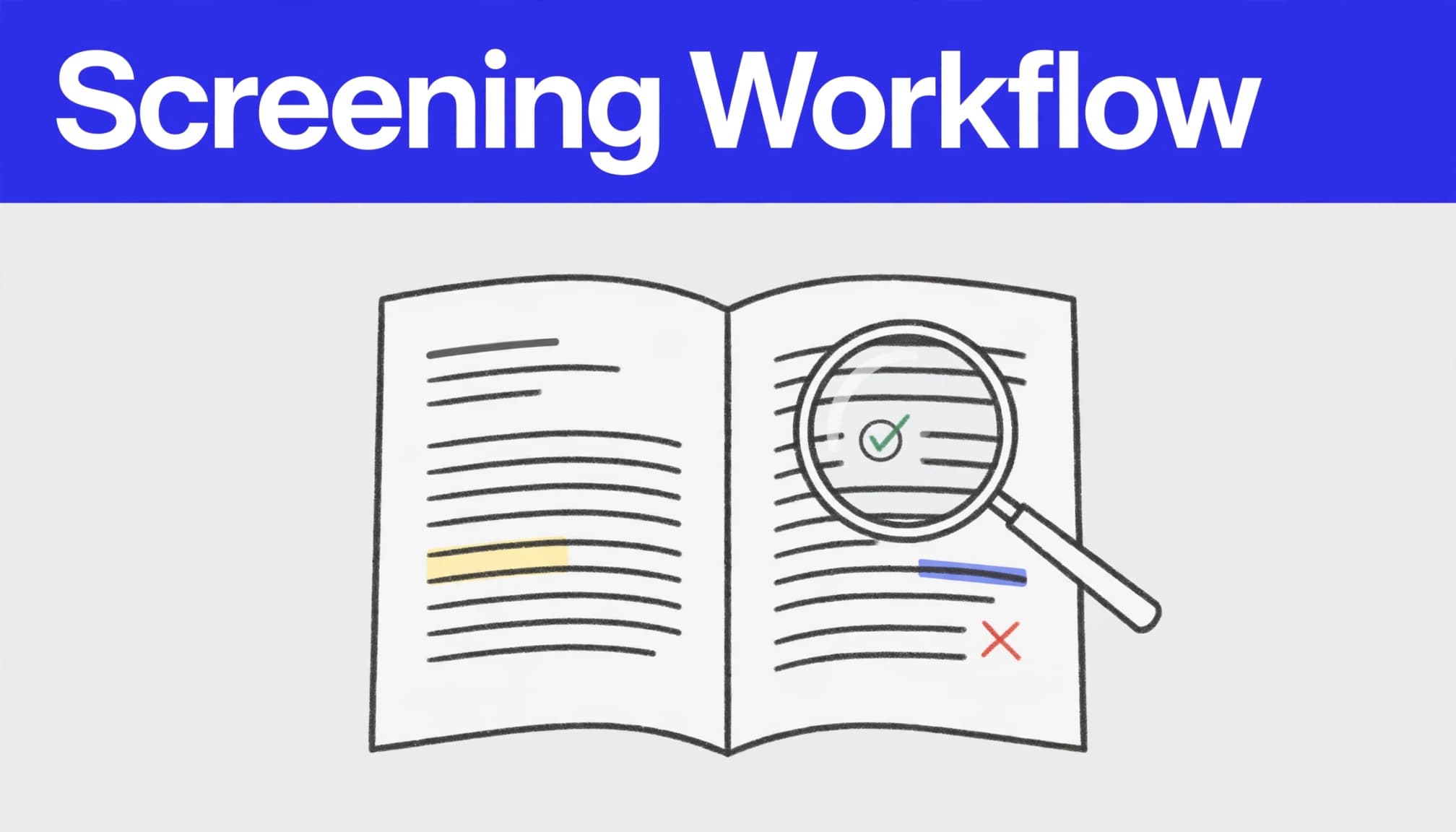
Rayyan helps teams import records, identify duplicates, and manage title and abstract screening, including disagreements. Its free tier is listed as allowing three active reviews and two reviewers per review. The September 2026 listing shows paid annual-billing plans starting at $4.99 per seat per month. Plan limits, pricing, and feature availability can change, so check Rayyan’s current tiers before relying on a specific AI feature or PRISMA diagram.
Covidence suits teams that want screening, full-text decisions, extraction forms, risk of bias assessment, and reporting in one workflow. It supports independent reviewer decisions and conflict resolution. Its September 2026 listing shows a $339 annual single-reviewer plan and a $907 annual package, with organization access priced by quote. The trial covers 500 records rather than offering a permanent free plan; verify current pricing and limits before choosing a plan.
ASReview LAB for prioritized queues
ASReview LAB is free, open-source software that uses active learning and machine learning methods. As reviewers label records, it ranks unscreened records by their likelihood of being relevant. Reviewers still need to check the results, since low-ranked records aren't proven irrelevant.
Set a stopping rule in your protocol and test it against studies you already know should be included. King's College London's guidance on AI-assisted screening is a useful starting point for documenting that approach. If your team needs built-in full-text extraction or risk-of-bias forms, plan to use another tool alongside ASReview.
Discovery and large-team management
Elicit helps explore and extract
Elicit supports research discovery, screening, and structured data extraction. It can help find candidate papers and compare answers across studies. Its literature searching may help with exploratory work, such as a scoping review, but discovery inside Elicit doesn't establish a comprehensive, reproducible search.
Record database searches separately, including dates, search strings, and limits. Then compare Elicit's suggested studies with those results. Confirm current plan limits and pricing on Elicit's official site before budgeting.
DistillerSR and EPPI-Reviewer suit established teams
DistillerSR supports systematic review management, structured workflows, and Smart Screening for title and abstract decisions. It describes both human-in-the-loop and fully automated configurations. For a high-stakes review, test how decisions are logged and exported, and whether the workflow follows your protocol before enabling automation. Check official pricing, as enterprise plans require a quote.
EPPI-Reviewer is another option for collaborative review management, particularly when a team needs a shared, structured project. Check its official site for current fees. Eligible Cochrane reviewers can access it through Cochrane credentials. Ask for a demonstration using your eligibility rules and export requirements, since a feature list alone won't show how well the workflow fits.
Data extraction needs a source trail
Build the fields before asking AI to fill them
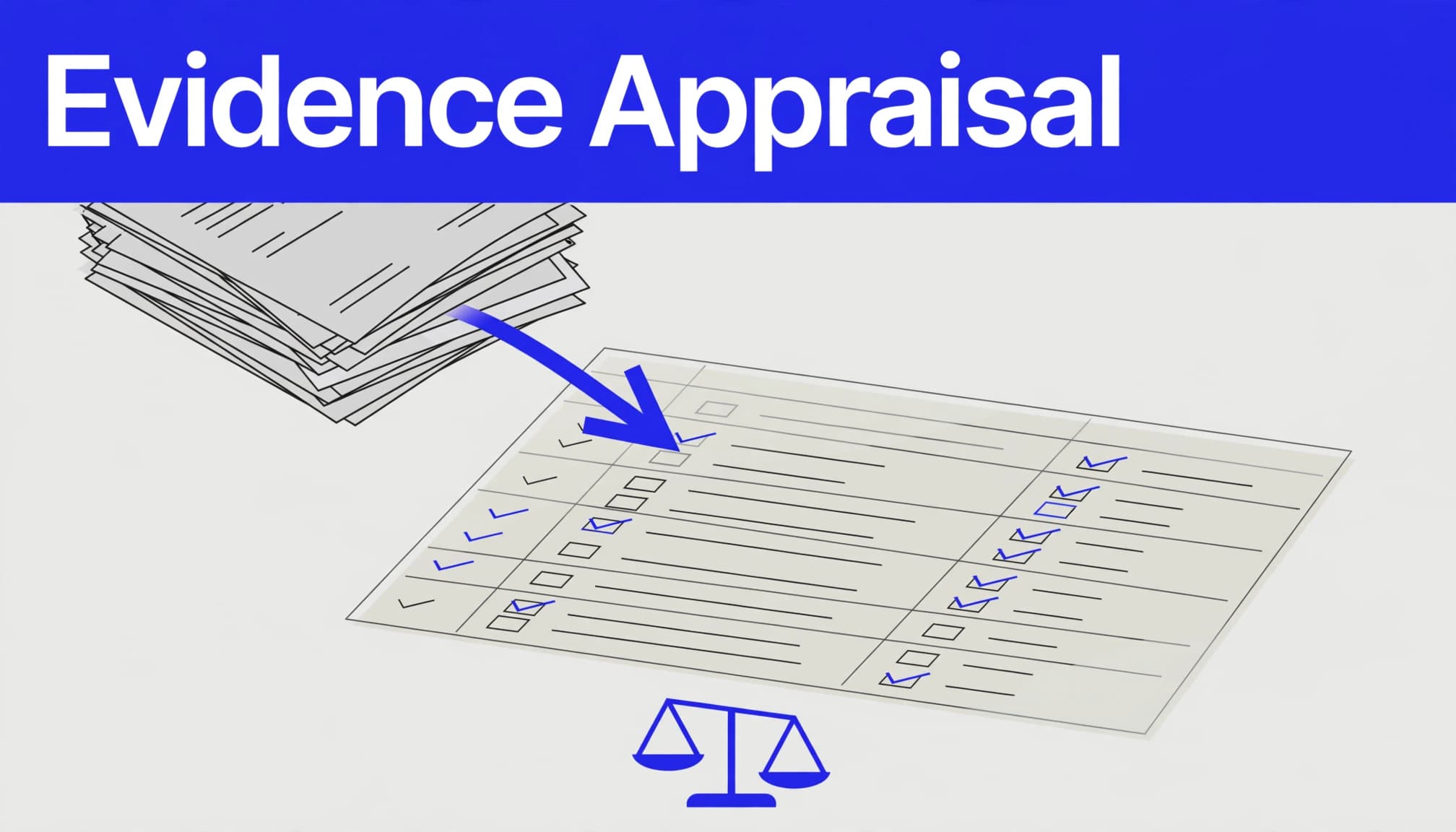
An extraction table works best when each included study has one clearly identifiable record. Define fields for citation, design, population, setting, outcomes, results, limitations, and supporting pages. Add fields tailored to your question, such as intervention dose or follow-up period.
Tools such as Elicit can draft structured entries. Source-grounded document chat can help locate passages in PDFs; NotebookLama describes its approach to source-grounded answers from documents. Verify every value and citation against the cited passage before accepting it. If the paper doesn't report a detail, enter "Not reported" rather than asking the model to fill the gap.
Separate extraction from appraisal
Large language models can confuse a paper's findings with results cited in its introduction. Large language models can also miss qualifications in tables or misread scanned PDFs. They may report a subgroup result as the overall outcome.
Have a reviewer check every outcome figure, denominator, time point, and page reference against the full text. Keep AI-suggested values separate from verified entries until that check is complete. Assessing study quality requires the same care, but risk-of-bias judgments depend on applying the chosen criteria, not on a fluent explanation.
How much screening work can AI save?
Published workload figures can help assess systematic review automation, but they aren't reliable promises for your project. Reviews differ in record volume, eligible-study prevalence, eligibility complexity, and acceptable error rates.
One evaluation of Abstrackr reported median workload savings of 83% with semi-automated screening and 97% with full automation. The automated screening approach also missed a median 11% of relevant records, with results varying across reviews. These figures describe screening workload in the evaluated reviews, not project time savings of 83% or 97%.
A 2025 comparison of AI and manual review methods offers broader evidence for assessing these tradeoffs. For your own project, pilot the tool on a labeled sample. Track reviewer time, conflicts, false exclusions, and known eligible records retrieved, with human involvement in these checks. Report the settings and stopping rule alongside any claimed savings.
How to choose systematic review AI tools
The best fit is the tool your team can use consistently and audit afterward. Before purchasing, run a short test that reflects your review type, whether it’s a scoping review or another review, using records with duplicates, borderline abstracts, and known eligible papers.
Test the whole handoff
Import a representative batch from literature searching and see whether metadata survives. Check how two reviewers use the screening workflow to make independent decisions, resolve conflicts, and export records. If an AI ranking changes the screening order, record when it was switched on and who checked the remaining queue.
Next, test extraction on papers with tables and ambiguous wording, checking large language models’ answers against the source passages. An answer that cites the wrong page should fail the test, even if its summary sounds plausible. If the research team lacks content expertise, ask a subject specialist to review difficult eligibility and outcome decisions.
Protect files and document AI use
Before uploading unpublished work or sensitive full texts, check institutional rules, vendor terms, sharing controls, and retention settings. NotebookLama’s guidance on secure AI tools for private research documents offers further checks for source-grounded research workflows.
Keep a record of databases searched, records imported and removed, human decisions, automation settings, and reasons for exclusion. PRISMA 2020 provides a 27-item reporting checklist, while the PRISMA flow diagram helps readers follow record counts. Good software can help produce those records, but the review team must verify them.
Frequently Asked Questions
Can generative AI complete a systematic review on its own?
No. Generative artificial intelligence can suggest search terms, rank records, and draft extraction entries, but it may miss studies or misstate results. Researchers must define the methods, check outputs, make defensible decisions, and approve the synthesis.
Which tool is best for a student with a small budget?
Start by checking whether your institution provides Covidence or EPPI-Reviewer. Otherwise, Rayyan's limited free tier is a practical option for collaborative screening, while ASReview LAB offers free active-learning screening. Choose based on the work you need to do, not the number of AI features advertised.
Does Elicit replace database searching and deduplication?
No. Its discovery features can surface useful studies, but a systematic search needs recorded sources, search strategies, and dates. Check the coverage of every discovery tool against your protocol, then document how you identify and remove duplicate records.
Conclusion
The safest way to save screening time is to know what your tool might miss. Choose software by review stage, test it on known studies, and retain a clear trail from each decision back to its source.
Human verification turns faster sorting and extraction into evidence a reader can inspect and trust.