A meeting can end with agreement and still produce no progress. Meeting action items become visible work only when each has an owner, timing, and a verifiable outcome.
Meeting action items turn spoken commitments into work people can see, own, and complete. AI can help extract likely commitments from meeting notes, but it can't safely resolve ambiguity or make promises for people.
A reliable process combines AI extraction with human review, creating accountability and improving meeting productivity.
Key Takeaways
A useful meeting action item names one accountable owner, a confirmed due date and time zone, clear success criteria, and relevant context.
AI can extract likely commitments from meeting notes, but people must review the source, resolve ambiguity, and confirm assignments before work begins.
Separate decisions and discussion points from tasks, and preserve supporting quotes, timestamps, dependencies, and approvals when possible.
Move confirmed tasks into one shared tracking workflow with a single source of truth for status, blockers, and completion.
Protect confidential meeting information by using approved tools, limiting shared data, and checking consent, access, storage, and retention settings.
Start with a clear definition of an action item
Meeting action items are specific commitments created by a meeting discussion, decision, or request. They record the next piece of work, not a recap of what people talked about.
Useful meeting minutes capture context, but they shouldn't bury tasks in a long narrative. A separate list of action items lets attendees scan what happens next without rereading every comment.
A meeting action item is not any project task
Project tasks might exist for months and originate in a roadmap, contract, or work plan. In project management, a meeting action item begins because someone agreed to do something during a particular conversation.
That origin matters. Preserving the originating conversation in the meeting notes helps team members understand the task's purpose and dependencies. It also shows which decision it supports and who needs an update. After review, a larger workflow may connect it to a broader project task, but the original context should remain available.
Use a format that removes guesswork
Each task should stand on its own when someone reads it days later. Use this action items template:
Element | What to record | Example standard |
|---|---|---|
Work | A clear verb and deliverable | Draft the revised onboarding checklist |
Task owner | One accountable person | Named individual, not "the operations team" |
Due date | A confirmed date and time zone | Sept. 12, 3 p.m. ET |
Done state | Evidence and success criteria | File is shared and approved by legal |
Context | Related decision or source | Follows the pricing decision in the meeting |
If several people must contribute, assign one task owner and list the others as collaborators. The task owner remains accountable, even when collaborators contribute. When a group owns a broad outcome, divide it into smaller tasks with individual owners.
AI can find likely commitments, but it cannot know whether an unrecorded pause meant agreement, hesitation, or dissent.
Prepare meeting notes that AI can interpret
AI produces better drafts of meeting action items when meeting notes preserve decisions, requests, and constraints. Loose transcripts full of side conversations create more review work.
Before the meeting, build a clear meeting agenda around decisions that need to happen. During the discussion, record the outcome beside the relevant agenda item. This keeps the notes tied to a purpose instead of becoming a running transcript.
Capture decisions, not only discussion
Listen for language that signals a commitment: "I will," "we need," "can you send," "by Friday," or "let's approve." Also capture conditions such as budget limits, dependencies, and approval requirements.
For instance, "We discussed a customer survey" is background. "The research lead will send a three-question survey draft for review" is a potential meeting action item until participants confirm it. Use this distinction to separate background discussion from action items that require confirmation.
Keep the source close to each task
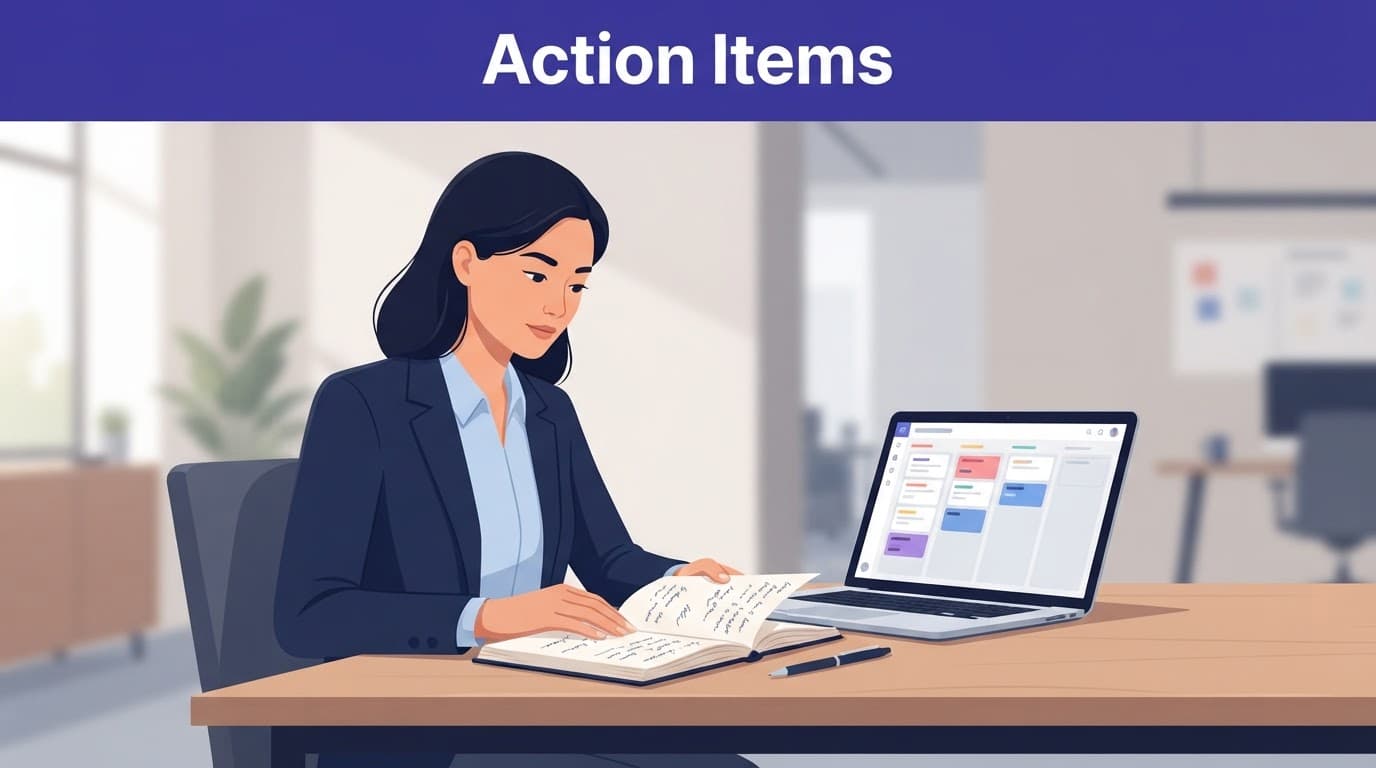
Add speaker names when possible, especially when several team members discuss the same deliverable. A transcription tool can preserve source accuracy. Timestamps, links to documents, and brief decision notes help a stakeholder validate extracted work against the meeting notes.
The City of Bellevue's AI notetaker guidance recognizes that AI-enabled tools can summarize meetings and surface potential assignments. Treat the output as a draft until meeting participants confirm it.
For remote meetings, write the time zone whenever anyone mentions a due date. "Tuesday morning" has different meanings for colleagues in Boston, London, and Singapore.
How AI turns notes into meeting action items
Give AI a narrow assignment. Ask it to extract action items from the meeting notes, not invent an action plan from general discussion. This distinction keeps plausible but unsupported tasks out of your workflow.
Use a reusable prompt template
Paste the meeting notes after this prompt, then review each result against the source material:
Read the notes below and identify only commitments that participants explicitly agreed to. For each item, provide the task, one accountable task owner, confirmed due date and time zone, success criteria, and a supporting source quote. Mark any missing owner, date, dependency, or approval as "Needs confirmation." Do not infer commitments, assign people, or create deadlines that aren't stated. Separate decisions and discussion points from tasks.
Notes: [paste notes here]
The wording matters because it tells the AI what to exclude. A useful output can include an "uncertain items" section, but those entries should never become assignments until a person validates them.
Review before assigning or sending
Review action items against the source before assigning or sending them. Check names, negations, dates, dependencies, and approvals first. AI can mistake a rejected idea for a decision, merge related tasks, or attach a date to the wrong item.
For high-stakes records, human review supports accountability, not just good meeting hygiene. Guidance on AI board minutes and confidentiality stresses human review and certification before AI output becomes an official record. Apply the same discipline to client commitments, compliance work, and leadership decisions.
Write action items people can complete
Vague wording in meeting notes creates vague follow-up. A task owner needs to know what to produce, where to put it, and how others will recognize completion. Clear meeting action items make that standard explicit.
Rewrite weak notes into verifiable commitments
The following rewrites turn broad requests into individual task assignments:
Weak note | Strong action item |
|---|---|
"Send the customer proposal." | "[Owner] will email the approved customer proposal to the customer by 3 p.m. ET on [date]. Done when the email and final file are linked in the CRM." |
"Marketing to decide webinar topic." | "[Named owner] will post the chosen webinar topic in the project channel by [date]. Done when the brief names one topic and its audience." |
"Look into the integration issue." | "[Owner] will reproduce the integration error and share a ticket with steps, impact, and screenshots by [date]. Done when the ticket includes all three details." |
These action items define success criteria that make completion verifiable. Strong wording also protects the team from endless task drift. "Review the contract" can expand without limit. "Mark redlines in sections 4 through 7 and return the document" has a clear boundary.
Set realistic deadlines and handoffs
A due date should come from an explicit agreement, an external deadline, or a discussion with the owner. If the record contains no date, have the AI label it "Needs confirmation" rather than guessing. The task owner should confirm the due date before work starts.
Break large project tasks into smaller deliverables for team members when another team depends on them. For remote meetings, include the time zone and a follow up channel, such as a shared task board or project channel. If a stakeholder's review affects the schedule, include that dependency in the handoff. A task due at the end of someone's workday may already be late for the next team waiting on it.
Move confirmed tasks into action-item tracking
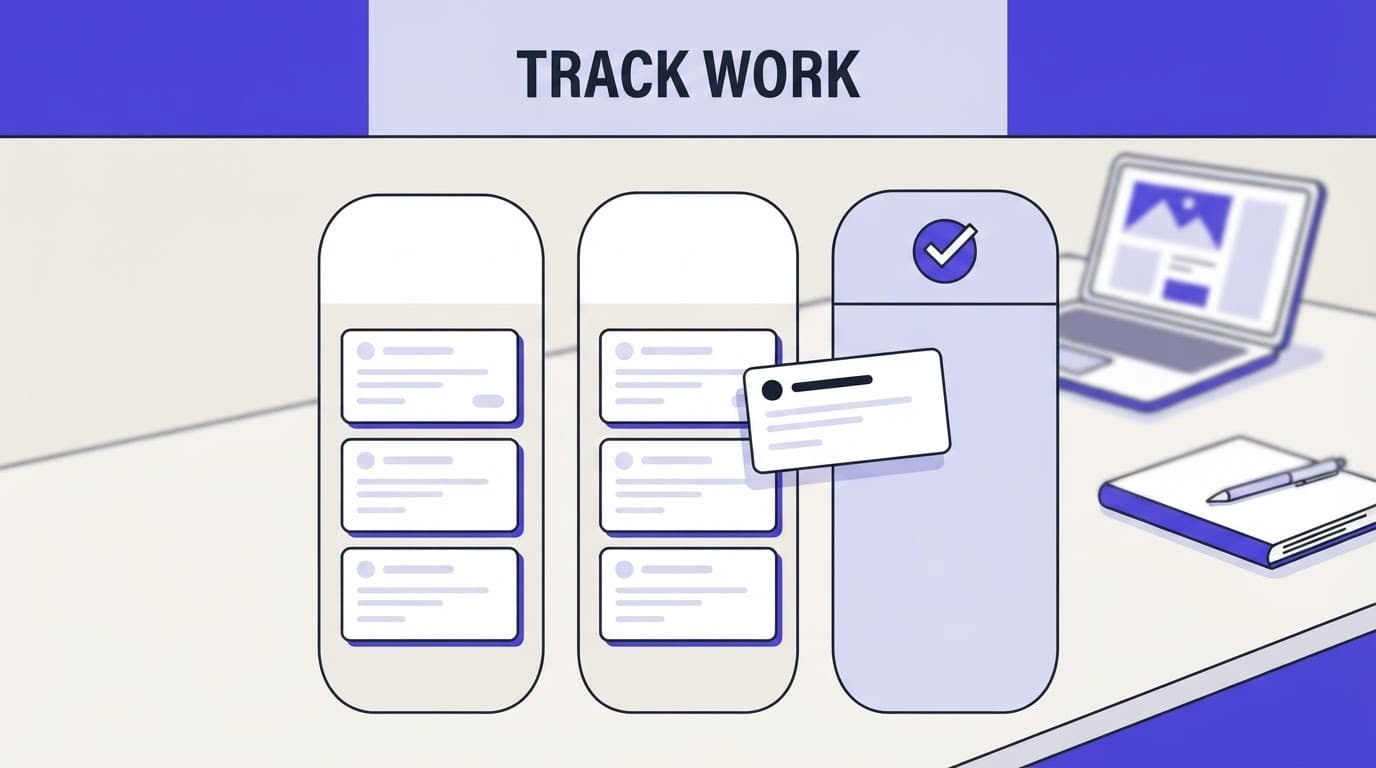
Meeting minutes are a historical record. A task system is where work gets managed. After review, move confirmed meeting action items into one action item tracking workflow, whether that means a shared tracker, collaborative tools with a central task view, or a project dashboard.
Keep one source of truth
Don't leave final task assignments and action items in meeting notes, chat threads, and personal notebooks at the same time. Link each task back to the meeting notes, then use one project dashboard for status, blockers, and completion.
The workflow stays tool-agnostic. Some teams use project management software, while others maintain a shared tracker. What matters is that every task owner knows where project tasks and updates belong. A project manager shouldn't need to search several systems for current status.
The UC San Diego guidelines for AI assistants also highlight that AI can transcribe discussions, identify key points, and distribute action items. Those capabilities still need clear access rules and a controlled destination for the resulting data.
Measure follow-through, not meeting volume
Track a few simple indicators after recurring status meetings to assess meeting productivity and improve meeting follow up:
Metric | Calculation | What it reveals |
|---|---|---|
On-time completion rate | Items completed by the due date divided by items due | Whether commitments match available capacity |
Average close time | Completion date minus creation date | How long meeting work remains open |
Overdue-item count | Open items past their due date | Where follow-up or re-planning is needed |
Unassigned-item count | Items without a confirmed owner | Whether decisions leave accountability unclear |
Review patterns by meeting type to strengthen accountability, not to punish individuals. Compare completion rate across meeting types to identify recurring issues.
A rising overdue count may point to vague scope, crowded agendas, or dependencies that weren't recorded.
Protect confidential meeting notes
Sensitive notes need more than a good prompt. Before using any AI assistant, confirm that your organization approves the tool, storage location, retention settings, and meeting-notice process.
Get consent and limit the input
Tell participants when AI will transcribe, summarize, or process the discussion. Follow your organization's rules and any local consent requirements before a notetaker joins.
Then share only what the task requires. Remove client identifiers, personal information, credentials, legal advice, and confidential deal terms when they don't affect the work extracted from the discussion. If a meeting is privileged, regulated, or highly confidential, use the approved internal process instead of uploading notes to a general-purpose service.
Check storage, access, and retention
AI meeting services may store audio, transcripts, prompts, meeting notes, summaries, and generated action items separately. Torys' guidance on AI minute-taking risks warns that vendors can gain access to proprietary and confidential information disclosed in meetings.
Set the shortest retention period that fits the team's needs. Restrict access to team members who need the notes, and confirm where generated files appear after the meeting. Treat AI-produced records and task lists as business records once they enter your systems.
Frequently Asked Questions
What is a meeting action item?
A meeting action item is a specific commitment created by a discussion, decision, or request during a meeting. It describes the next piece of work and should include an owner, timing, and a verifiable outcome.
Can AI create meeting action items from notes?
AI can identify likely commitments and draft action items from meeting notes. It should not infer agreement, assign people, or invent deadlines, so participants must review and confirm each item before it becomes an assignment.
What should every action item include?
Each action item should include a clear deliverable, one accountable task owner, a confirmed due date and time zone, success criteria, and context linking it to the meeting. If any of these details is missing, mark it as needing confirmation rather than guessing.
Where should confirmed action items be tracked?
Move confirmed tasks from the meeting minutes into one shared tracker, project dashboard, or task-management workflow. Link each task back to the meeting notes, but use the central task view as the source of truth for status and completion.
How can teams protect confidential meeting notes when using AI?
Use only organization-approved tools and tell participants when AI will transcribe or process a discussion. Limit the information shared, restrict access, and confirm storage and retention settings, especially for privileged, regulated, or highly confidential meetings.
Turn agreement into accountable work
AI supports extracting stated commitments from meeting notes, but clear accountability still comes from people. Use it to preserve context and flag uncertainty, while team members confirm what remains unclear.
The strongest action items name one task owner, carry a confirmed due date, and show a visible result in the project dashboard. Use the action plan to guide consistent meeting follow up in status meetings and improve meeting productivity. Clear meeting action items keep decisions from disappearing into the notes.