To extract pre-registration details with AI, gather the paper, supplements, and cited registration, then request evidence-linked fields. Check every extracted detail against those sources before classifying the study as preregistered.
Reliable preregistration extraction depends on traceable evidence. A methods section describes what researchers report doing; it doesn't establish what they planned before seeing the data.
Start by separating the prospective research plan from later descriptions, then build a repeatable extraction workflow.
Key Takeaways
Require a source passage and page or section reference for every extracted field.
Keep preregistered plans, published methods, and results in separate columns.
Mark inaccessible or ambiguous information explicitly, and protect unpublished manuscripts before uploading them.
Understand What Counts as Preregistration
Preregistration means depositing a time-stamped, read-only study plan in a public repository before data collection or analysis. The plan usually specifies hypotheses, design, and analyses. Public access can be delayed through an embargo.
Separate confirmatory and exploratory research
A confirmatory analysis tests specified hypotheses and aims to limit false positives. An exploratory analysis generates hypotheses and aims to reduce false negatives.
The Center for Open Science's preregistration guidance explains why this distinction matters. Planning 100 tests but reporting only the five with p < .05 can mislead readers and make false positives harder to detect. All planned analyses need reporting, including null findings; omitted or unperformed analyses require explanation.
Therefore, extract the planned analysis itself. A registration identifier alone says little about how much analytical flexibility the plan constrained.
Distinguish preregistration from registered reports
Registered reports add journal review. Stage 1 evaluates the rationale and methods, followed by in principle acceptance before data collection. Stage 2 reviews the completed report against that accepted plan.
By 2019, more than 200 journals offered the format, with adoption reportedly doubling approximately annually. These are historical adoption figures, not current totals.
For extraction, record Stage 1 acceptance separately from registry submission. Ordinary registration doesn't imply peer review or a publication commitment.
Gather the Sources and Protect the Manuscript
Assemble a study-specific source set
Collect the full paper, supplementary methods, the preregistration record (such as one in the Open Science Framework (OSF)), attached analysis plan, and any amendments. For registered reports, include the accepted Stage 1 protocol when available.
Name files clearly and preserve their versions. A paper containing several experiments may reference different registrations, so map each identifier to its corresponding study.
If the PDF is scanned, check its text recognition. Broken tables and missing mathematical symbols can distort hypotheses or analysis specifications.
Choose tools within your confidentiality boundaries
For public papers, our PDF document chat provides cited answers that help locate relevant passages. Use those citations to guide inspection, not replace reading the evidence.
For confidential or unpublished manuscripts, use institution-approved tools and permitted inputs. Check retention, model-training use, access permissions, and deletion controls before uploading.
Remove unnecessary participant identifiers and confidential reviewer comments. Apply the same restrictions to generated answers and exported matrices, which can reproduce sensitive source material.
Build a Source-Grounded Preregistration Extraction Workflow
Locate claims before extracting details
To find pre-registration details, search the paper for "preregistered," "registration," "pre-analysis plan," "OSF," "AsPredicted," and trial identifiers such as NCT numbers. Check the methods, transparency statements, footnotes, and supplements.
Ask AI to return each relevant passage with its location, then resolve the cited record. A detailed methods section or registration identifier alone doesn't prove preregistration. A generic OSF project link may lead to editable files rather than a finalized registration.
Extract each document separately
Define your matrix before prompting. Process the paper, supplement, and registry record separately so the model doesn't merge planned and completed procedures.
Use a bounded request:
Use only this source. Extract the registration identifier, dates, hypotheses, planned sample size, outcomes, exclusions, stopping rule, and analysis plan. For every field, provide the source passage and a page or section reference. Label information as a prospective plan, later method, or reported result. Use "not reported," "unavailable," or "uncertain" when appropriate. Don't infer preregistration from detailed methods.
Keep the same column order across sources. After individual extraction, compare information across multiple PDFs to identify agreements and conflicts.
Verify before accepting the output
Treat AI output as a starting point. Check every extracted detail against the paper, supplements, and cited registration records. Read the surrounding passage, not only the highlighted sentence.
Record both printed and PDF page numbers when they differ. For unpaginated records, use section headings or question numbers.
Save the prompts, outputs, and corrected matrix. For systematic reviews, have a second reviewer check timing, registration status, and consequential discrepancies.
Record the Fields That Support a Defensible Judgment
For preregistration extraction, use a matrix that preserves evidence rather than producing a single yes-or-no label.
These fields cover the main extraction decisions:
Field | What to record |
|---|---|
Study identity | Experiment number, population, and matching registration identifier |
Timing | Registration date, recruitment date, data-access date, and analysis timing |
Hypotheses and outcomes | Planned direction, primary outcomes, and measurement definitions |
Sample and exclusions | Target size, stopping rule, eligibility, and exclusion criteria |
Analysis plan | Models, covariates, transformations, multiplicity handling, and missing-data rules |
Evidence and status | Source location, supporting passage, accessibility, and uncertainty |
Keep planned and reported values separate. The achieved sample size must never overwrite the registered target.
Record amendments in a version history so transparent changes remain visible without overwriting the original plan.
For existing datasets, the COS framework distinguishes registration before data collection, before any human observation, before researcher access, and before analysis. Each category requires certification of the relevant data status.
Extract that certification rather than assigning a category yourself. Registration before analysis can still follow access to data, so timing needs more detail than a publication date.
Use "not reported" when an inspected source omits a field. Use "unavailable" for inaccessible material and "uncertain" for conflicting or ambiguous evidence.
Compare the Plan With the Published Paper
Identify substantive deviations
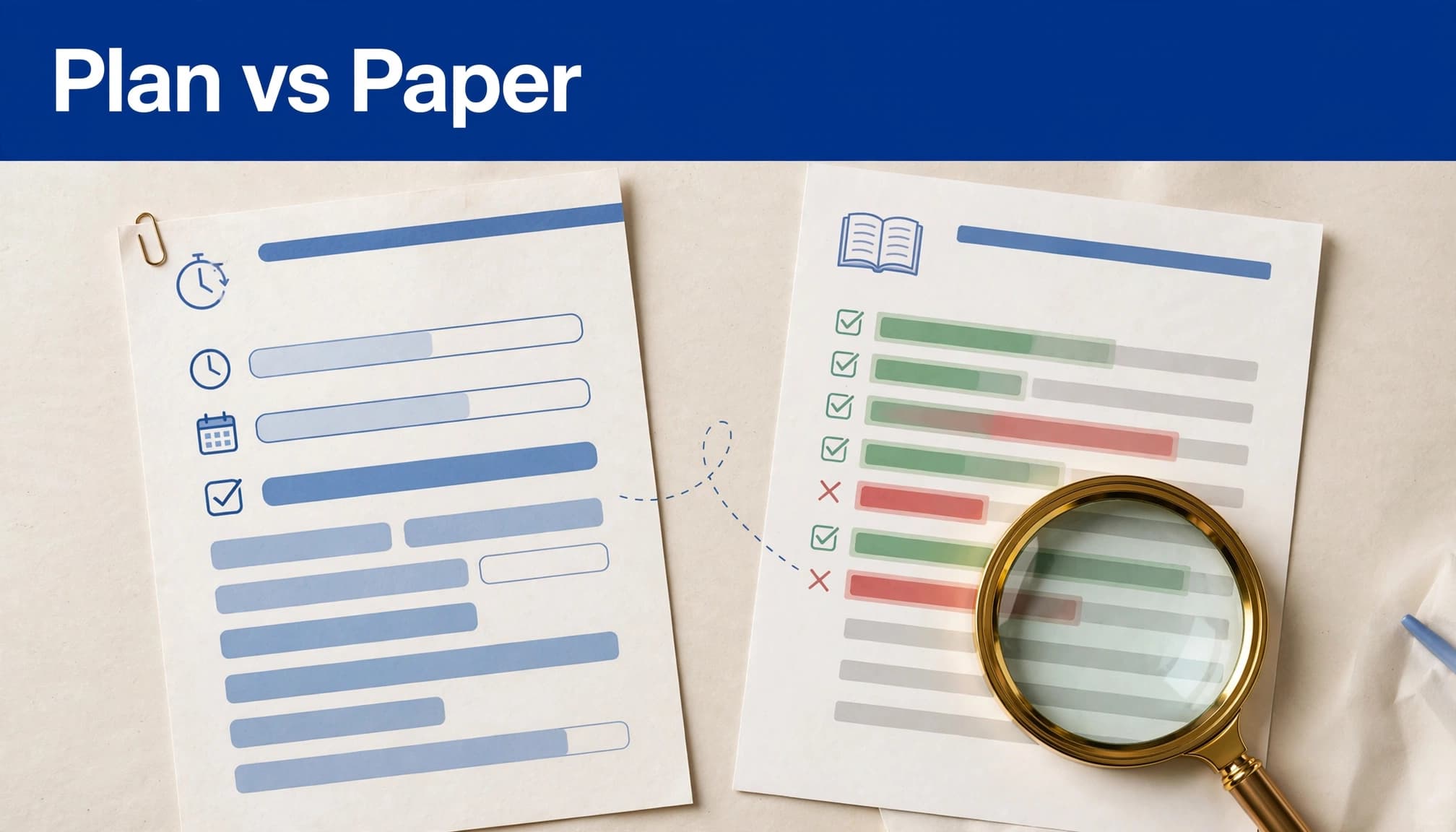
For preregistration and registered reports, compare the accepted plan with the final paper. Check hypotheses, primary outcomes, sample targets, exclusions, stopping rules, and statistical models. Record each difference with references to both documents.
Deviations are common and don't automatically invalidate a study. Record the authors' explanation and whether each decision came before or after they knew the results. Classify added analyses as confirmatory analysis or exploratory analysis.
Then assess each deviation's effect on test severity, meaning how well the analysis could expose a false hypothesis and limit false positives. Changes to outcomes or exclusions after results are known need particular scrutiny.
A 2024 economics study by Brodeur and colleagues found reductions in p-hacking and publication bias only when preregistration included a preanalysis plan. That finding supports examining plan content rather than treating registration as a quality guarantee.
Preserve the history of changes
An unconfirmed OSF registration can be cancelled during the administrator approval window, which lasts up to 48 hours. Once approved, preserve the original record.
For changed plans, create a new preregistration and explain how it relates to the original. Depending on the circumstances, withdraw the original or document amendments through a transparent changes document. A withdrawal leaves a public notice.
For extraction, capture every version's date and explanation. A later amendment mustn't silently replace the plan available before data collection.
Interpret Registry Access and Clinical Trial Timing
Read OSF and AsPredicted records correctly
OSF permits an embargo of up to four years. During an embargo, authorized view-only links can support peer review without making the record publicly accessible.
When creating a registration from an existing project, OSF can include project files totaling up to 5 GB. Its registration guide covers templates, submission, and administrator approval. For extraction, inspect attached plans as well as form answers.
AsPredicted uses nine questions. Its access and search policy states that registrations aren't searchable or indexed; readers access them through shared links. Failure to find a record through search doesn't establish that none exists.
Treat healthcare registration as a separate requirement
Clinical trial registration has publication and ethical requirements beyond ordinary social-science preregistration.
ICMJE's clinical trial registration requirement took effect July 1, 2005, as a condition of publication consideration, with provisions for trials already underway. Its policy requires prospective registration at or before first-patient consent for enrollment.
The revised Declaration of Helsinki requires registration in a publicly accessible database before recruitment of the first participant.
ClinicalTrials.gov and WHO-recognized primary registries provide trial records. For ClinicalTrials.gov records, extract original registration dates and outcome histories, because current entries may contain later revisions. The clinical trial reporting requirements also distinguish journal policies from legal reporting obligations.
Frequently Asked Questions
What if the paper claims preregistration but the record is inaccessible?
Record "author-reported preregistration; record unavailable." Preserve the identifier and the paper's supporting passage. Don't claim that timing or plan content has been independently verified.
An embargo or broken link isn't evidence that no registration exists.
What happens if researchers didn't preregister?
A study can still provide useful evidence. Without a prospective record, readers have less evidence for distinguishing advance hypotheses from decisions made after observing data.
For clinical trials, missing or late clinical trial registration can affect publication eligibility and compliance with applicable requirements.
Must every preregistered analysis appear in the final paper?
All preregistered analyses need transparent reporting, including null results. Supplements can provide details when journal space is limited.
If an analysis wasn't performed, record the omission and the authors' explanation. Label added exploratory analyses separately rather than presenting them as preregistered tests.
Keep the Evidence Ahead of the Summary
AI can speed up preregistration extraction by locating passages and organizing comparisons. The defensible result is a source-linked record that separates advance plans from later methods and findings.
Preserve missing information, version histories, and transparent changes, and mark uncertain or unavailable details as such. Readers should be able to trace each judgment to the paper, its supplements, or the cited registration record without relying on the AI summary.